

For those doing African-American research, antebellum estate inventories are commonly used to find enslaved ancestors. But all genealogists should make it a regular practice to examine all the items in an inventory. This practice will help us understand our ancestor’s day-to-day lives. Scrutinizing inventories can provide many interesting little details to make a written family […]
You are browsing archives for
Category: Evaluating Evidence
The Definition of Black: Race and the Ce...

Censuses provide the framework for much of the family history research that we do. Because of this, it is useful to consult the instructions that were given to census enumerators. They are online at the University of Minnesota’s website. The confusing and shifting definitions and “racial” categories are a reminder that race is a fiction […]
Matilda: Back Another Generation

I have been having some tremendous breakthroughs in this year. With every new name, a piece of me and and my history slides into place. Into memory. Searching for Matilda’s Roots My search for my great-grandmother Matilda’s roots is a wonderful example of the value of cluster research. For many years, I knew nothing about […]
The Criticality of the 1870 Census

When researching African-Americans, the criticality of the 1870 census cannot be understated. That year is called the “Brick Wall” for good reason. Considered personal property, enslaved people were not enumerated by name before 1870 (free blacks were). Most African-Americans were enslaved prior to the Civil War. Since most former slaves remained near where they had […]
A White Father: Direct Evidence
My friend Aaron has made an incredible find that I wanted to share because it is such a rarity. Many people researching former slaves have encountered interracial children in their family trees. Enslaved women frequently had children with white men. Enslaved women did not own their own bodies and were commonly sexually abused. Sometimes the […]
Lie To Me: Inaccurate Records
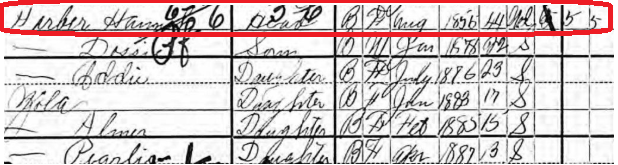
Records lie to us. The very records we depend upon to reconstruct our families, lie all the time. Inaccurate information is everywhere. A Few Examples In this 1900 census, my third great-grandmother Hannah Harber reported that she was widowed: But her former husband Joseph was alive and well. Sadly, he left her for another woman. […]
Always Check the Original

I cannot overemphasize the importance of seeking original records during our research. In this era of Ancestry.com, transcriptions, indexes and databases are becoming accessible at a dizzying rate. While databases and indexes are useful, we must remember that they can never be a replacement for the original record. Common Issues Original records can be hard […]
Untangling Matildas: Brick Wall Crashes ...
My great-grandfather John Smith was born in Georgia and migrated to Jacksonville, Florida sometime around 1900. His roots in Georgia continue to be one of my greatest brick walls. (Update, 2018: DNA uncovered his roots!) I had a huge breakthrough on John’s wife’s family yesterday. This is an excellent case study in evaluating evidence. Georgia […]
Tracing Enslaved Ancestors Through Proba...

Inventoried Slaves For those of us descended from enslaved ancestors, we are taught to research probate records early in the process. They can be used to verify slaveownership. If the slaveowner died before 1865, we may find our ancestors named in their will or listed in their inventories. As we advance in our skills, however, […]
One Step Closer in Alabama: the Fendrick...

This beautiful picture is of my great-grandmother Effie Fendricks. I have posted before about my long odyssey researching her roots. I had a breakthrough in August 2009 when I found a duplicate death certificate. In this research, I encountered the common roadblocks of migration across state lines and name changes. On top of that, their […]