
 At the beginning of our genealogical journey, we all make mistakes—I certainly have. Mostly, it’s because we are new and simply don’t yet have the experience we need. Genealogy is a skill and like all skills, it improves with training.
Notice I didn’t say it improves with time.
Of course, we grow and learn from our mistakes. And in that spirit, I’d like to share 6 big mistakes genealogists frequently make, in no particular order. I have addressed many of these topics over the years, but they remain relevant and useful reminders in 2025.
1. Never reading a book or taking a class on how to do basic genealogical research.
If you’ve been doing genealogical research for 5 or 10 years and have never read a book on genealogy, never taken classes, and simply never committed to growing your skills, you will not improve. This applies to almost anything. We should approach genealogy the same way we would approach gardening, skiing, photography, or hiking. How would we ever improve without training?
Today, there is no shortage of excellent books on genealogical research.

Many people, lured in by those fancy Ancestry commercials, jumped online, typed a few family names, and off they went.
The problem is this: they won’t know the basics about genealogical research such as how records are arranged, what records are available, where to find the records, and how to use the records. In short time, they will be stuck and declare they have a brick wall.
If this sounds like you, head on to your local library and see what’s available. There are also many excellent online webinars, virtual classes, and (of course) the webinars I present periodically here at Reclaiming Kin. Be sure you join my free mailing list (at right, scroll down) so you will receive notice of my posts and classes.
2. Believing that if we cannot find a record, it doesn’t exist.
Frequently, what people mean when they say this is that they can’t find the record online. Yes, the number of records online today is massive, but it still represents only a minuscule portion of the total records that exist. Everything will never be online.
This is an especially pernicious problem for those who began their research online in the first place. It’s harder in that case to realize that most genealogical research is done in repositories, such as courthouses, genealogical societies, libraries, or state archives.
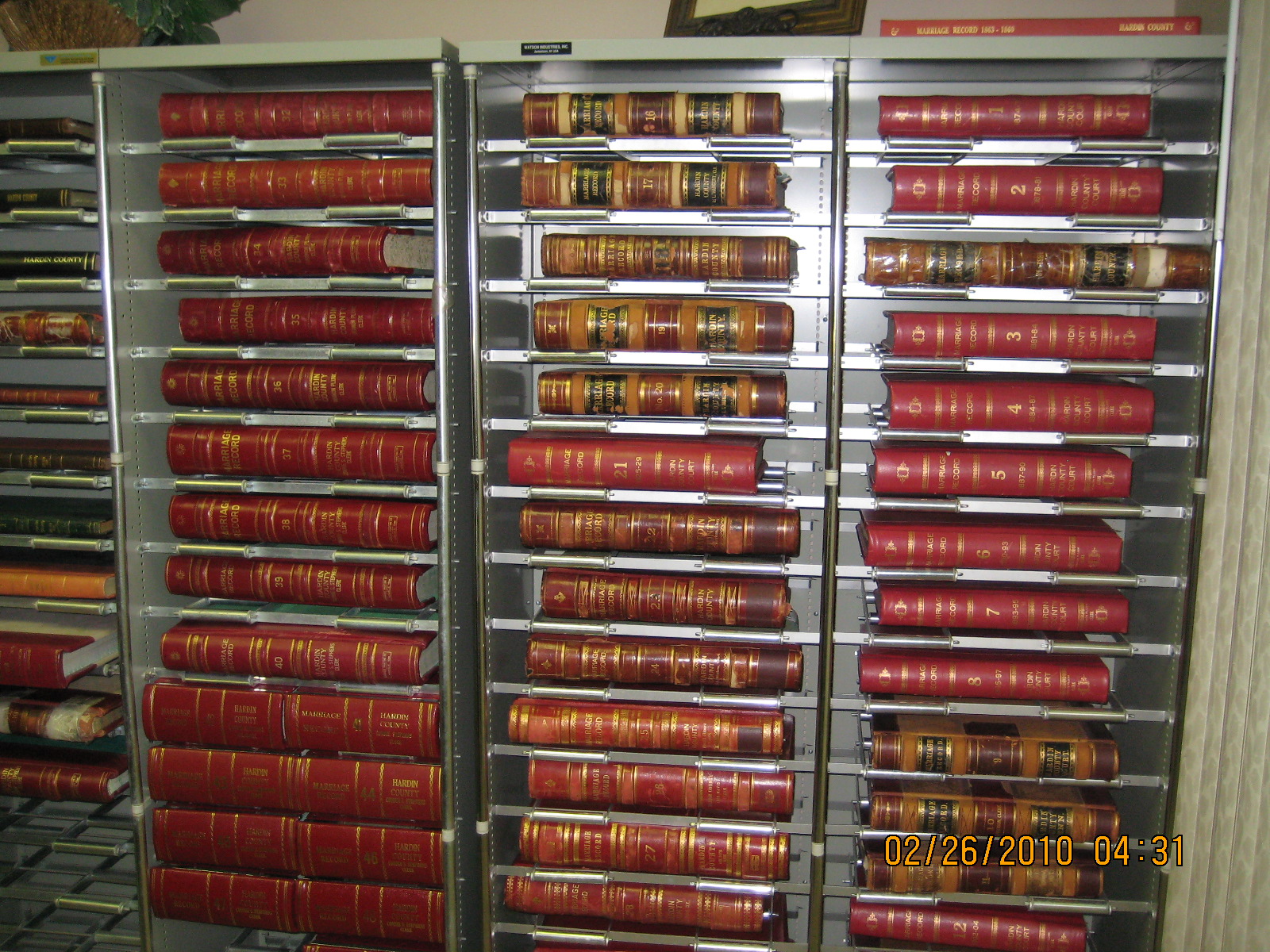 The record we need may be just sitting on a shelf in one of these repositories waiting to be found, like the wall of deed books shown above.
The solution to this problem is to learn what records exist for the location where your ancestor lived. You could even create a locality guide.
The FamilySearch Wiki is a great place to start. I also highly recommend the NGS series of books called Research in the States. Purchase the book for each of your research states. Each volume has been written by a genealogist with expertise in that particular state.
Just remember: not finding a record *online* doesn’t mean the record doesn’t exist.
3. Believing that the information in any one source is accurate.
This is a big one. We are usually so excited to see records with our ancestor’s names that we never stop to consider that everything in the document might not be accurate.
Records can contain inaccuracies for many reasons: shame, imperfect memories, fraud, or simply mistakes the clerk made when recording the information.
For example, although Hannah in the 1900 census below claimed she was a widow, she was not. Her husband had left her for another woman. I probably wouldn’t want to tell some stranger that either.
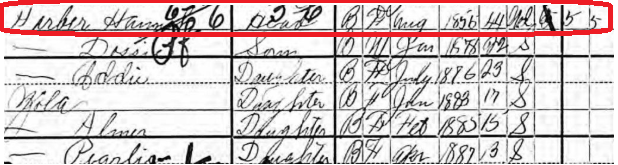
1900 Hardin County, TN
We have to be willing to grow our skills of analysis, of correlation, and of critical thinking. We need to research in a wide variety of records and understand the story the records tell when considered together—not just individually. What information in the records agree? What information doesn’t agree?
For me, this is the truly exciting part of genealogy, because with advanced analysis skills you can uncover relationships that never seemed possible before. A very good example of that is my ancestor Jane Eliza Sherrod.
4. Not using original sources in our research.
Do you know what is considered an original source? Original sources, if you ask me, are the lifeblood of family history. One of the most important guidelines in genealogy is that we always attempt to use the most reliable records. Typically, these are the records created closest to the time of the event.
Unfortunately, I still see researchers using information gleaned from online databases or unsourced family trees. They are not taking the time to find and analyze the original source.
For example, this is what people find online and use:
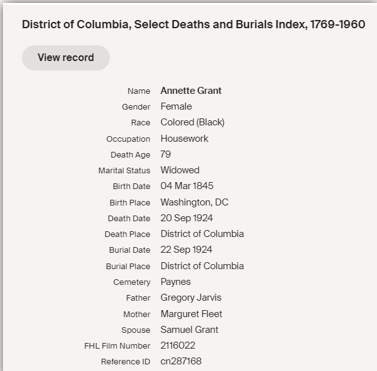
Researchers should instead take the time to find the original source, which is the actual death certificate:
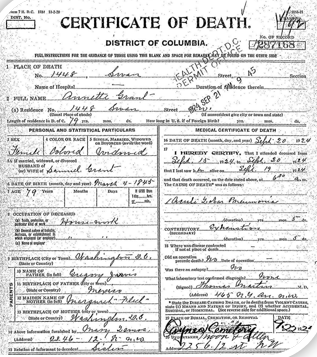
This is particularly true with census records, where many people use the transcribed page from Ancestry since it’s easier to read. I’ve seen entire binders filled not with actual census images, but with the transcribed census image. Don’t trust the transcribers, you must analyze the record yourself.
These practices are detrimental to our research, and can be fixed by going back to number one above: take some training to advance your skills. It’s actually a lot of fun to do!
5. Not taking research notes.
When I was younger, I could remember almost every detail about my ancestors (or pretty close to it). If you asked me a question, most of the time I knew the answer right off the top of my head.
But age is a heartless teacher. My situation is completely reversed now: if I don’t refer to my notes, I don’t know what I really know. I was very slow in coming to the research notes party, and I don’t want you to be.
Without research notes, you will eventually repeat work you’ve already done—wasting valuable time. You will order a death certificate only to find that you already ordered it 5 years ago.
Time is our only nonrenewable resource. Time is the true cost of genealogical research.
This means you’ll need to be more efficient over the years, and that requires taking notes. In whatever format you are most comfortable, start it now. It doesn’t have to be fancy.
Whether you are using a word processor, an Excel spreadsheet, a binder, or a notebook, write down the date, your research question, and exactly where you searched and what you did or didn’t find.
Here is a snippet of the 1st page of one set of my research notes:
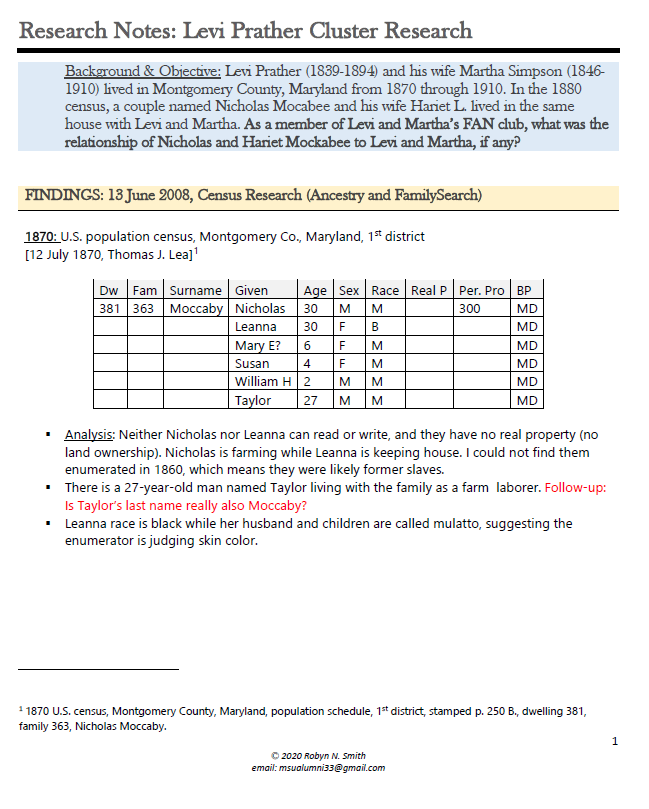
Research Notes
6. Not creating source citations for the information we find.
I’ve been talking about citations forever at Reclaiming Kin. I really do get why people moan and groan about citations. It reminds us of school. It’s time-consuming and appears complicated.
We are doing genealogy to have some “light” enjoyable fun. The citation book Evidence Explained is huge and intimidating. There is no inspiring Ancestry commercial or episode of Who Do You Think You Are? that centers around the joy of source citations.
But you should take the time to learn how to do them. They get easier, like everything, the more you practice.
For me, I’ve spent almost 30 years doing genealogical research. I want my family to know where I got my information from. I want to draw my conclusions from the best evidence. I want my work to be taken seriously by whoever reads it.
Not understanding source citations in my early years is my single biggest regret.
Family members died before I understood I needed to ask them where they obtained their information. I spent countless hours in libraries and archives copying records, without recording how to find that information again.
I can’t get that time back, but I can help you! Take the time to learn how to create source citations and why they are so critical to the research that we do.
Which of these mistakes have you made? What would you add to this list?


I am an engineer by day, but my true passion lies in genealogy. I have been a researcher, writer, and teacher for over twenty years. This blog is where I share family history strategies, resources, tips and advice for all genealogists. I also discuss researching slavery and its aftermath. This lifelong quest has helped me to better know my family’s past. I’ve taken back– reclaimed– some of that lost memory, especially that of my enslaved ancestors. I hope you’ll sign up to receive my posts—if you do, you’ll get a free PDF with some of my favorite tips! And please do share posts that interest you.